
My Favorite Fabric Marking Tools
Today, I’m sharing the fabric marking tools I reach for most often, what I like about each one, and a few things to watch out for before marking your next project.
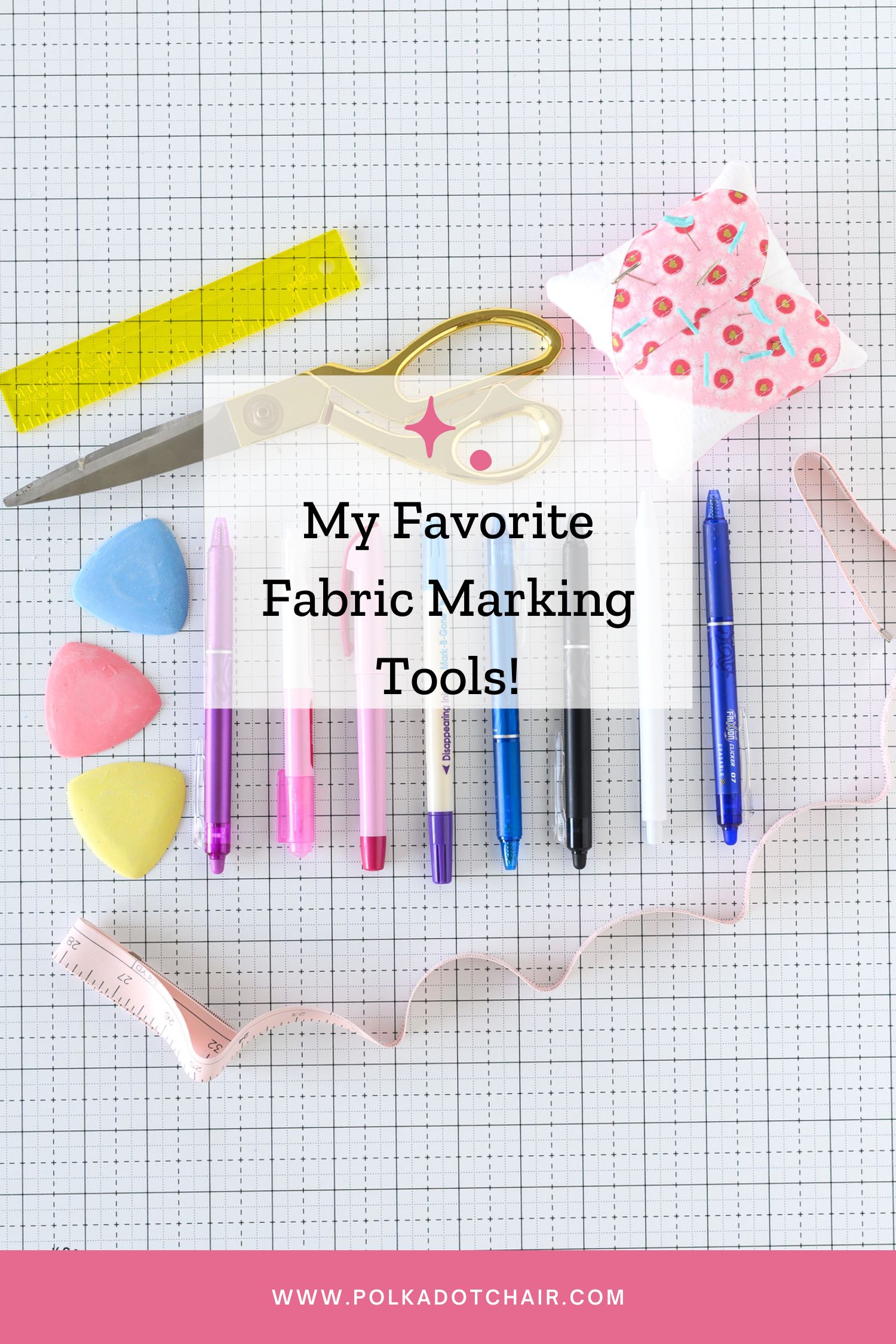
When it comes to sewing and quilting, finding the right fabric marking tool can make all the difference. Some glide on smoothly but fade too soon, while others stay put a little too well. Over the years, I’ve tried just about every option, chalks, pens, pencils, and everything in between, and I definitely have a few favorites.
Just a reminder: this is my personal opinion. There are many wonderful marking tools available, and your favorite might be different from mine, and that is okay!
Things to Consider When Picking a Marking Tool
When choosing a marking pencil for sewing or quilting, there are several important factors to keep in mind so you get crisp, visible marks that won’t damage your fabric or your finished project.

1. Fabric Type
- Light vs. dark fabrics: Light fabrics need darker markings (blue, gray, or pencil lead), while dark fabrics require white or brightly colored pencils.
- Delicate fabrics: Choose softer pencils or washable markers to avoid snagging or leaving grooves.
2. Mark Visibility
- The marks should be easy to see but not so dark that they might shadow through light fabrics.
- Always, always test the color contrast before committing.
3. Removability
- Check how the marks come out: some disappear with water, some with heat, and others fade over time.
- Always test on a scrap of your project fabric to ensure they erase or remove easily.
4. Precision of the Line
- Fine tips are best for detailed piecing, embroidery placement, or quilting lines.
- Thicker pencils are suitable for rough guidelines or cutting layouts.
5. Permanence
- Some pencils (or markers) can set permanently with heat or time. This can be dangerous if you iron before removing the marks.
- Ensure you understand how to remove the mark on the fabric before you start.
6. Ease of Use
- Consider how smoothly the pencil glides over fabric.
- Mechanical fabric pencils can stay sharp, whereas traditional chalk pencils may require sharpening.
7. Personal Preference
- Some quilters love heat-erasable pens (like Frixion), while others avoid them due to potential ghost lines.
- Try a few brands and styles to see what feels right for your projects.
Shopping List:
One: Sewline Trio Pencil
This mechanical pencil has three marking options: a regular black lead pencil, a white lead, and a pink lead.. Just turn the barrel to select your colour. And there’s a rubber on the top too.
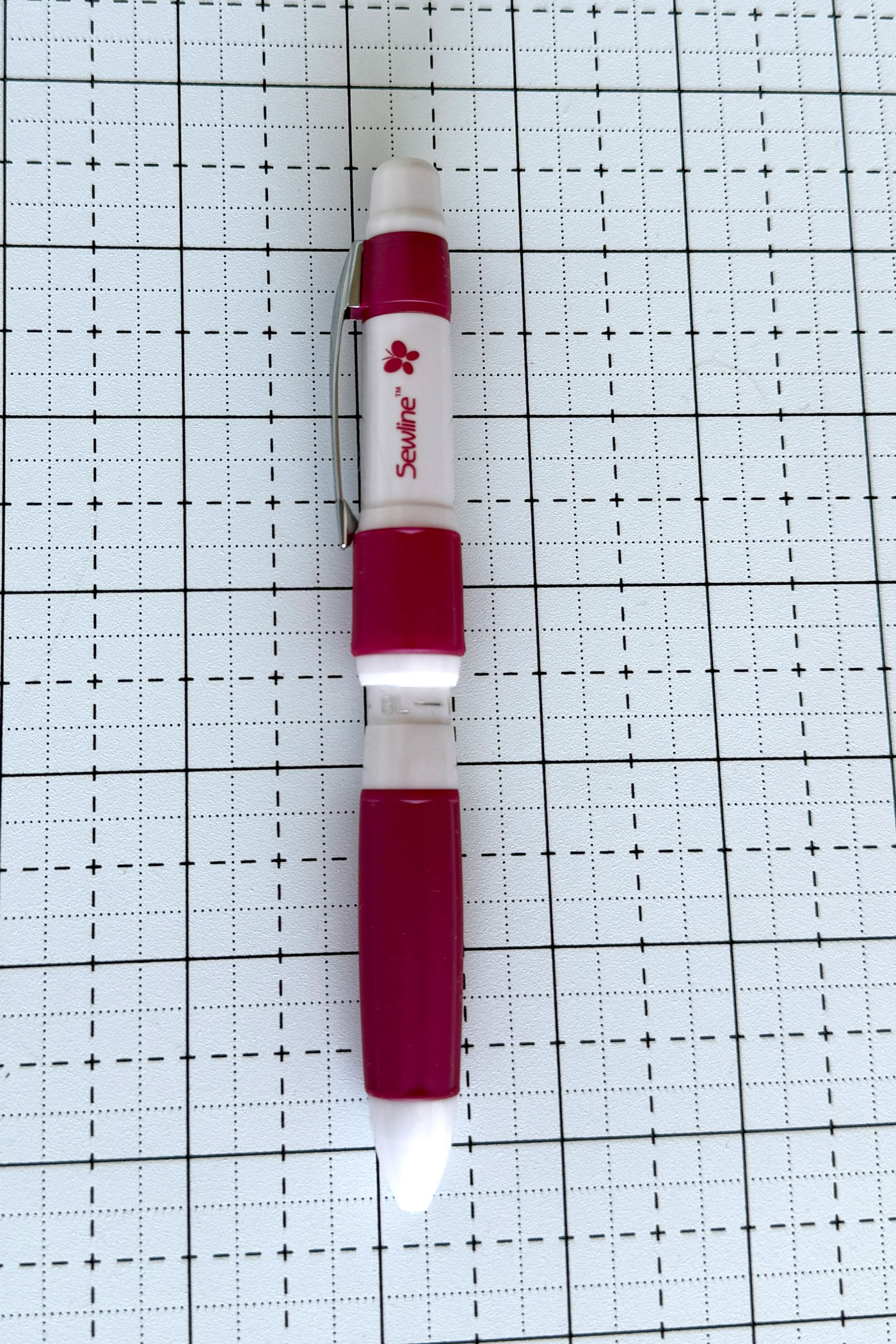
The super fine, white lead option (which can be swapped for a few other pale colors) is excellent for a variety of marking jobs, including half-square triangle lines, appliqué outlines, embroidery lines, and more. The downside is that you can only press lightly to rub out the lines, and the lead runs out quite quickly.
Two: Hera Marker
Hera Markers come in two sizes. I use the larger one more often, but the smaller size is still a handy tool. This is an indentation marking tool, so there’s no need to worry about the lines not disappearing.

I mostly use my Hera Marker to create guides for straight-line quilting. Although it produces a thicker line than other indentation marking tools, that is a plus point when you are marking on the three layers of a quilt. The wide edge of the larger size Hera works really well against a quilting ruler.
Three: Sewline Tailors Pencil

The Sewline Tailor’s Chalk Pencil produces fine, precise lines and is easy to use, thanks to its click-style design; no sharpening is required. It erases cleanly with water or the included eraser on most fabrics, creating less dust than traditional chalk. However, marks can sometimes be hard to remove if left too long. Therefore, testing on a scrap first is recommended.
Four: Dritz Pen
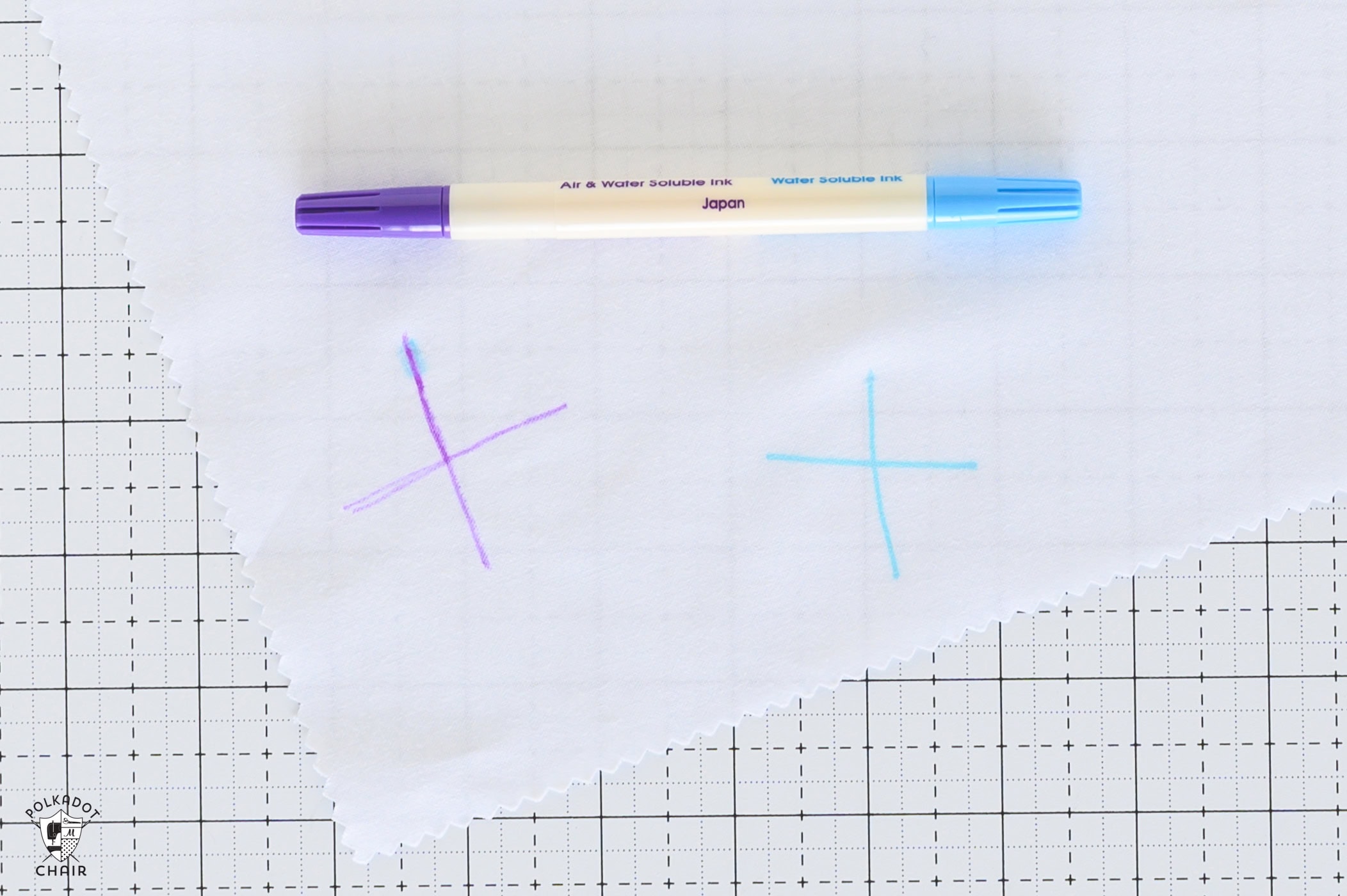
This felt-tip style pen has two ends: one that disappears with air or water and one that disappears with water. The purple ink disappears after a few days or can be washed out. It’s great for various marking jobs, including half-square triangle lines, appliqué outlines, embroidery lines, and more.
Ink is great because it usually goes on smoother than pencils (sometimes pencils can drag on fabric and distort it slightly if you press too hard), and it is often much more visible than other marking tools. But be cautious with ink because… It’s ink!
Don’t draw all over your beautiful project before testing it first. Test that it doesn’t bleed, then check that it comes out properly. Once it’s out, ensure there are no shadow marks left behind.
Also, be aware that if you mark your fabric with the purple side (the one that disappears when exposed to air), it can fade relatively quickly. I’ve left a project overnight before only to come back and discover that my marks had faded overnight.
Five: Tailors’ Chalk
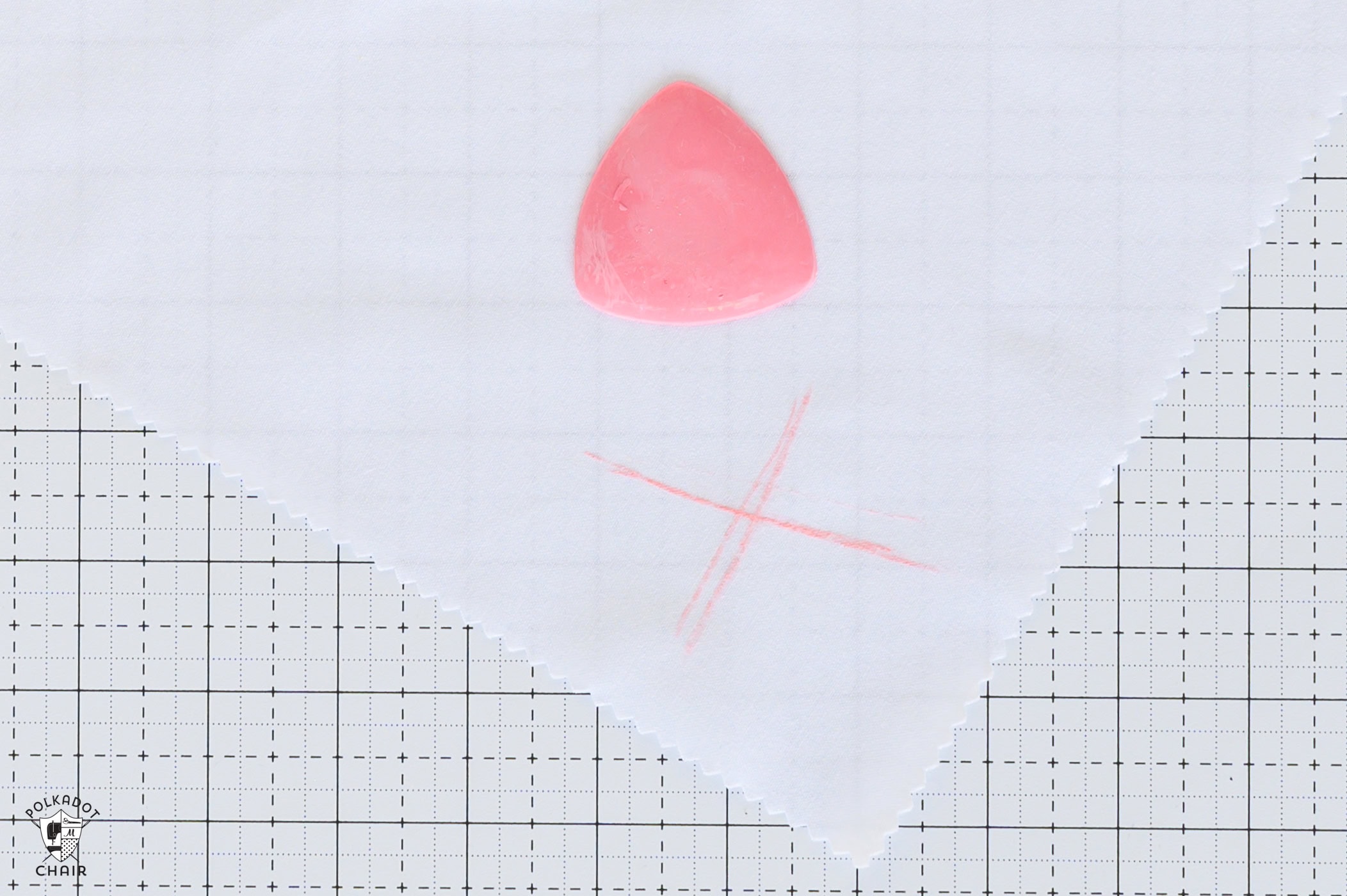
Tailor’s chalk is inexpensive, easy to find, and available in several colors that make clear, visible lines on most fabrics. It’s great for quick, temporary markings that can usually be brushed or washed away. However, it can be dusty or crumbly, sometimes breaks easily, and the marks may fade too quickly or, in the case of wax-based chalk, become difficult to remove, especially if pressed with heat.
Six: Frixion Pen
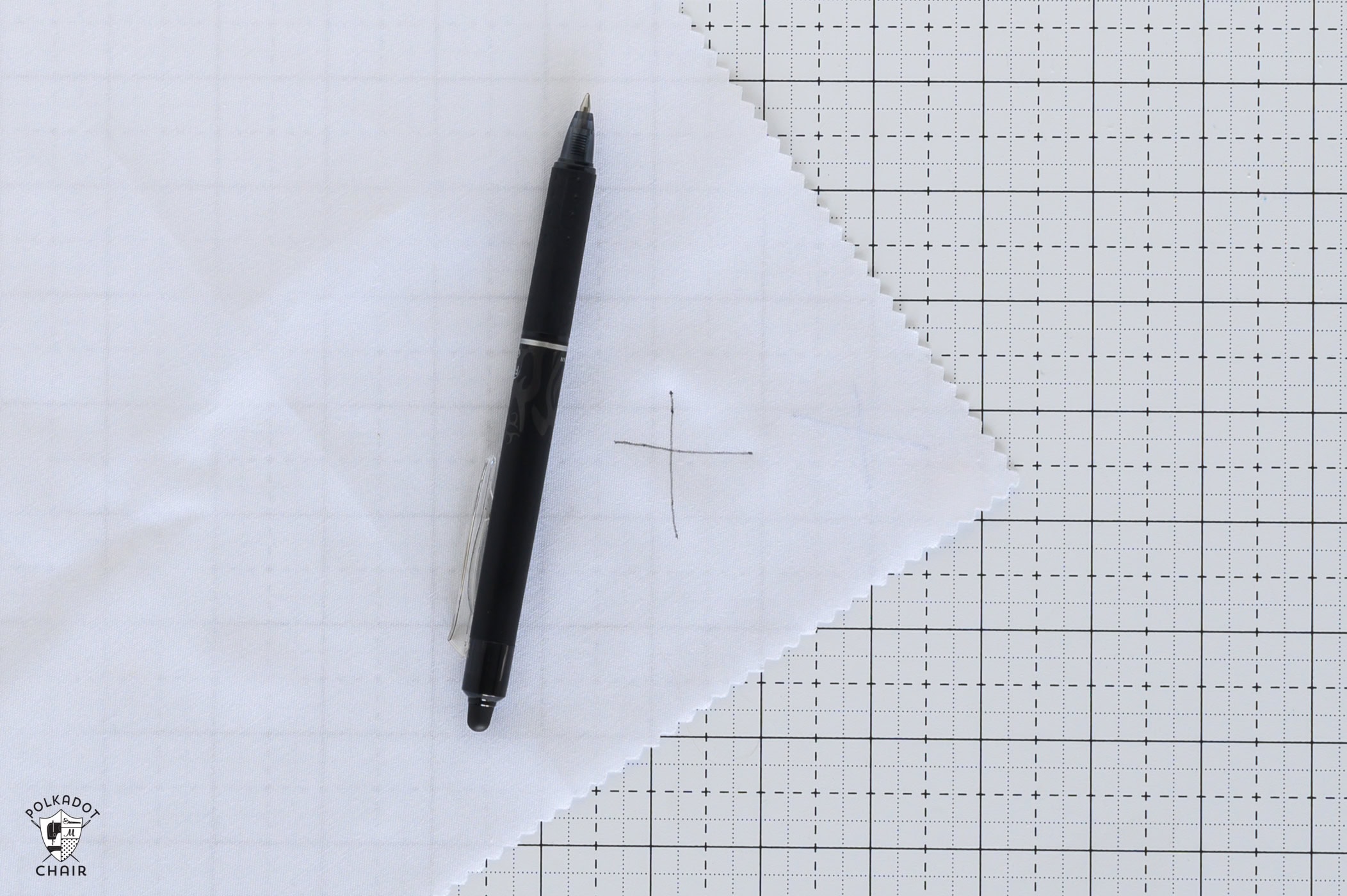
Frixion pens are designed for paper, but many love to use them for sewing. They are erasable ink pens that are commonly used for sewing and quilting. They are my “go to” when it comes to marking fabrics.
Frixion pens make clear, precise lines that disappear with heat, making them popular for marking quilt blocks or embroidery designs. They come in a variety of colors, are easy to use, and can be erased cleanly with an iron. However, some quilters have noticed that the ink may not truly be gone.
Some people have said that the ink can reappear in cold temperatures or leave faint ghost lines on some fabrics. Since they weren’t explicitly designed for fabric, it’s best to test a small area first and avoid using them where marks might show later.
I have not had any issues using Frixion pens; however, I mostly use them for marking half-square triangles, and the part of the fabric marked with the ink is cut when the blocks are assembled. If you are using them to mark a highly visible portion of your quilt, be sure to test it first.
Seven: Chacopen Pink with Air Eraser
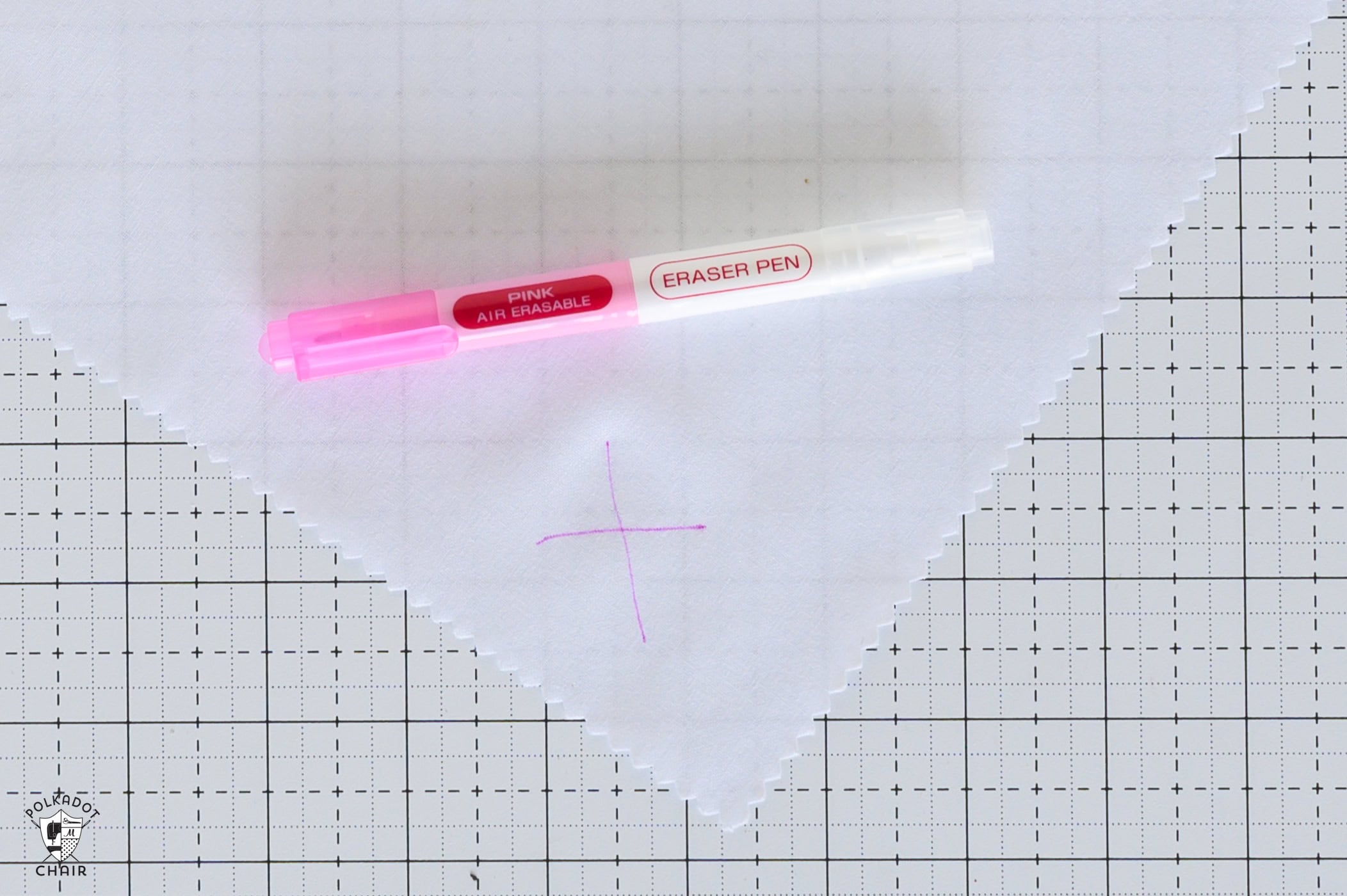
The Clover Chacopen Pink with Air Eraser makes fine, precise pink lines that fade on their own after a short time or can be removed instantly with the built-in eraser.
It’s convenient, clean, and ideal for temporary markings without the mess of chalk. However, the marks may not show well on light fabrics, and some quilters say they can sometimes linger or reappear after pressing, and the eraser’s effectiveness varies by fabric type, so it’s best to test it on a scrap first.
This is just a short list of options! I’d love to hear which ones are your favorites. Let me know in the comments section!
I use Frixion for all cutting lines or seam lines. Once I used the Orange pen and noticed that it left a ghost line.
Hi Melissa, I didn’t realise there were so many fabric marking options. My favourite is the friction pen, a wonderful invention even though not designed for fabric, but I wouldn’t recommend it for use on black fabric, it does leave a white line when ironed out.
Dawn Jennings
Adelaide, South Australia
Thank you for the tip about the frixion on black fabric!
In regards to your article on marking pens,be advised that there are 2 different types of Frixion pens– those for office use ,and those for quilting. The quilting ones have a rounded eraser built into the end,the office type is like a “clicker” ball point pen. The quilting variety disappears with heat from an iron. But if used on dark fabrics,it may leave a light line. Again,testing is advised. Been using these pens for years,refills easy to find,and I love them. Linda Smith